
Skip to content
CardinalEnergy
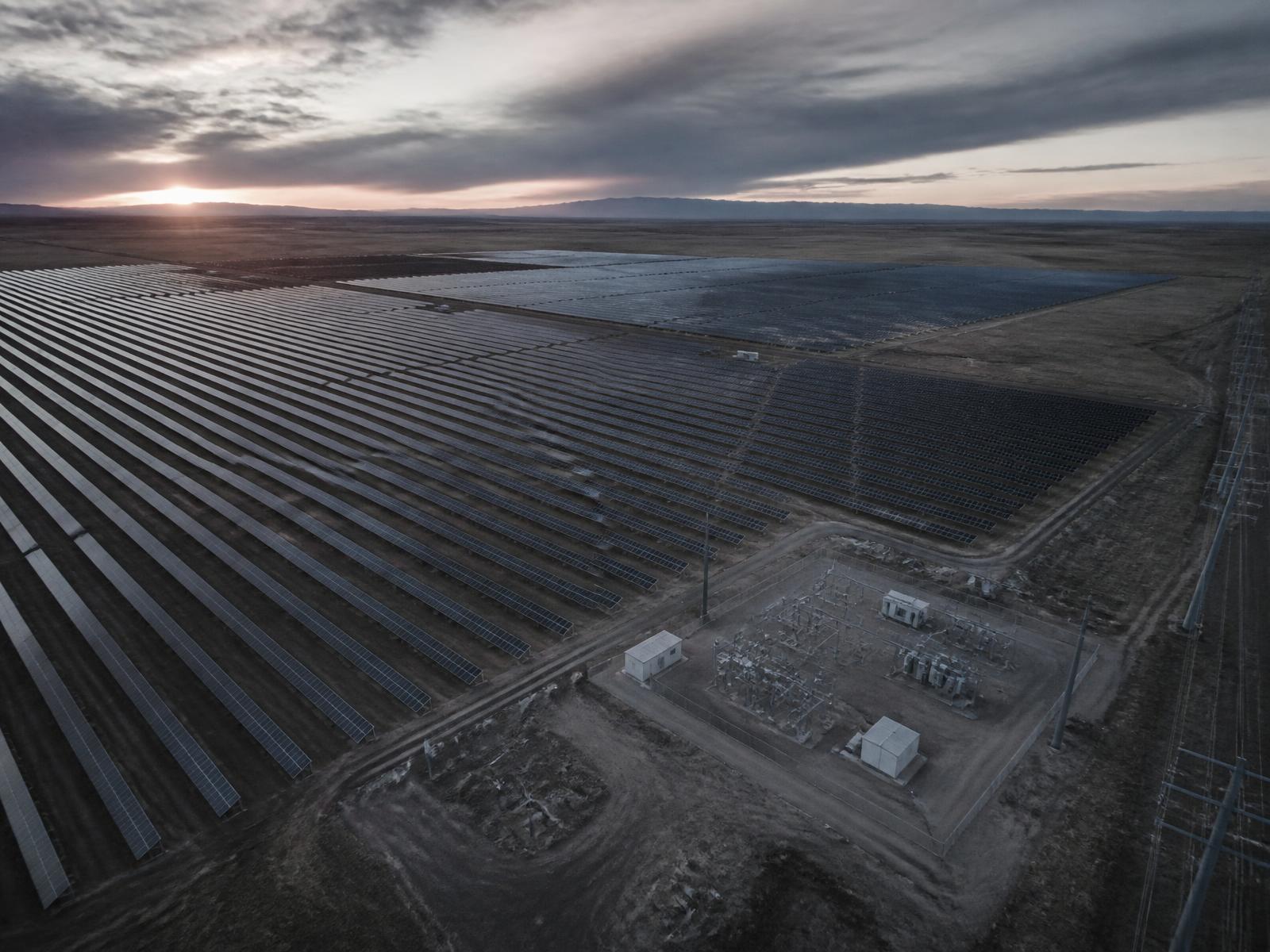
Aerial view of a utility-scale solar project

Financial Modeling & Underwriting

Models built for real development and financing decisions.

Cardinal's models connect actual development assumptions — schedule, CAPEX, interconnection, offtake, and risk — to financing outcomes and investment decisions.

Why it matters

A model is only useful if it reflects how the project will actually be built and financed.

Models built in isolation from development drift from reality: schedules move, interconnection costs change, and sizing assumptions no longer support the debt or tax equity structure being pursued. Cardinal maintains models alongside the development workstream so underwriting stays current through diligence.

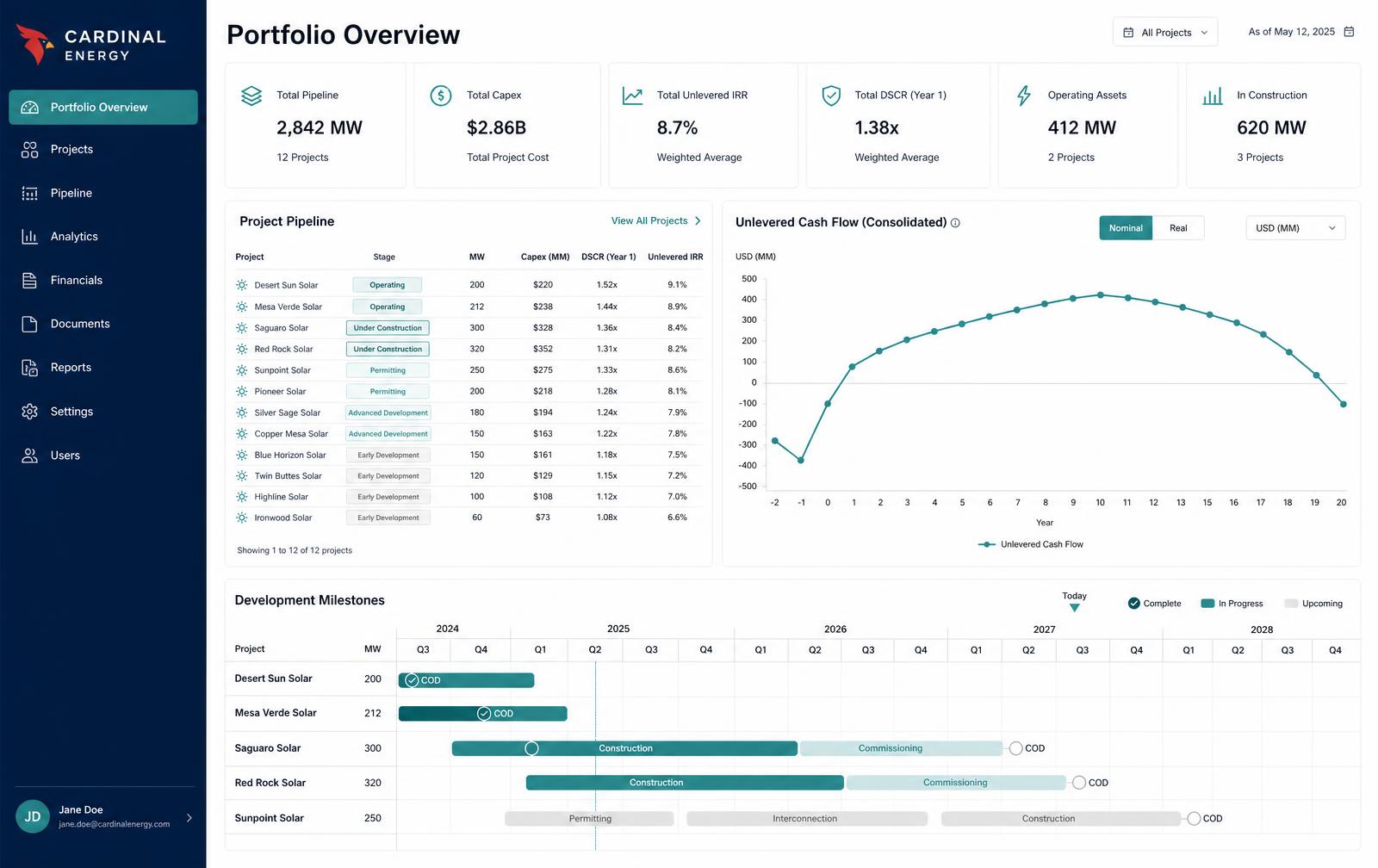
Portfolio dashboard showing unlevered cash flow curve, DSCR and IRR metrics across a solar project pipeline

Modeling logic

How development assumptions translate into financing decisions

Cardinal's models connect project realities to debt capacity, investor economics, and financeability.

  1. STEP 01

    Development Assumptions

    • Schedule / COD
    • CAPEX
    • Interconnection
    • Offtake & revenue terms
    • Risk assumptions
  2. STEP 02

    Project Economics

    • Cash flow
    • Revenue profile
    • Operating expenses
    • P50 / P90 production
    • Tax credit value
  3. STEP 03

    Debt & Credit

    • DSCR
    • Debt sizing
    • Leverage capacity
    • Lender sensitivities
  4. STEP 04

    Tax Equity / Investor Economics

    • ITC
    • Depreciation
    • Investor returns
    • Equity structure
    • Return targets
  5. STEP 05

    Financing Decision

    • Capital structure
    • Financeability
    • Return profile
    • Transaction readiness

Capabilities

Underwriting depth across project and portfolio

01

Project Economics

  • Project cash flow models
  • Revenue modeling
  • Operating expenses
  • CAPEX
  • P50 / P90
  • Scenario analysis

02

Debt & Underwriting

  • Debt sizing
  • DSCR
  • Sensitivity analysis
  • Financing optimization

03

Tax & Investor Economics

  • Tax credit calculations
  • Depreciation
  • Investor economics
  • Investor return cash flow waterfalls

04

Returns & Portfolio

  • Project IRR
  • Equity IRR
  • Levered / unlevered returns
  • Portfolio modeling

Sensitivities

What changes financing outcomes

Conceptual sensitivity of financing outcomes to key modeling inputs
InputDSCRDebt capacityProject IRREquity IRR
CAPEXMediumHighHighHigh
COD delayMediumMediumMediumHigh
Production (P50 / P90)HighHighHighHigh
Interest rateHighHighLowMedium
Tax credit valueLowMediumMediumHigh

Directional sensitivity only. Actual impact is quantified per project in Cardinal’s models.

Representative experience

Modeling that supported financing

Debt Financing

Renewable-energy portfolio lender process

Challenge

A renewable-energy portfolio required lender underwriting and project-finance support.

Cardinal Role

  • Project financial modeling
  • Debt sizing
  • DSCR analysis
  • Cash flow analysis
  • Development assumption validation
  • Lender diligence support

Outcome

Supported the financing and closing process for a multi-project portfolio.

Tax Equity / ITC Monetization

Multi-project renewable energy portfolio

Challenge

A multi-project renewable energy portfolio required tax credit valuation, project-level modeling, and tax equity structuring.

Cardinal Role

  • Modeled approximately 17 projects
  • Analyzed ITC and depreciation value
  • Evaluated financing structures
  • Supported investor economics
  • Helped prepare the portfolio for tax equity discussions

Outcome

Supported advancement of the portfolio through a tax equity process toward financing.

Start a conversation

Do your models support the financing you are pursuing?

Whether the constraint is development capacity, project economics, financing strategy, tax equity, or transaction execution, Cardinal can help identify the path forward and provide the capability to execute it.

Discuss Your Portfolio

Start with a conversation about your active projects, portfolio priorities, and financing constraints.